
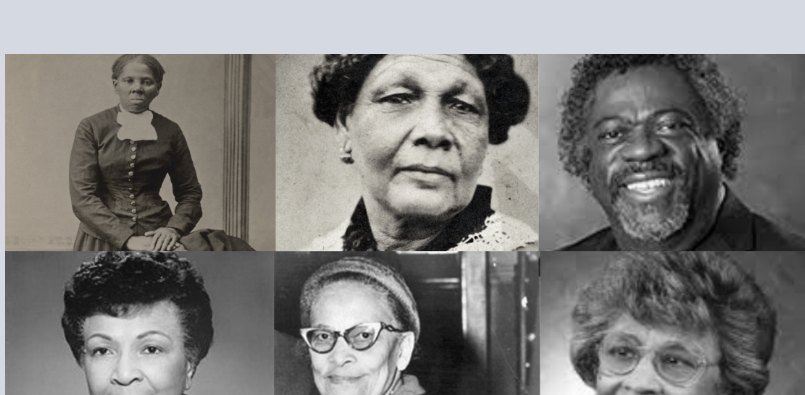
As we celebrate Black History Month, it is important to recognize the incredible contributions that black nurses have made to the nursing industry. Throughout history, black nurses have played an integral role in providing care, advocating for their patients, and paving the way for new medical breakthroughs.
Mary Seacole (1805–1881)
Mary Seacole was a pioneering nurse who made significant contributions to the nursing industry during the 19th century. Facing significant obstacles due to her race and gender, she persisted in pursuing her passion for nursing. During the Crimean War (1853–1856), Seacole traveled to the front lines to provide medical care to wounded soldiers, setting up her own field hospital known as the “British Hotel.” Her legacy continues to inspire the nursing profession today.
Harriet Tubman (1820–1913)
Harriet Tubman is one of the most celebrated and influential figures in history. Born into slavery, she later escaped to freedom and dedicated her life to liberating slaves through the Underground Railroad. What many people don't know is that Harriet Tubman was also a nurse — during the Civil War, she served as a nurse for the Union Army, caring for sick and wounded black soldiers.
Mabel Keaton Staupers (1890–1989)
Mabel Keaton Staupers became a registered nurse in 1917 and joined the National Association of Colored Graduate Nurses (NACGN). She organized a campaign to integrate the Army Nurse Corps, which finally agreed to accept black nurses in 1945, followed by the Navy Nurse Corps in 1948. In 1949 she became the first black nurse to serve on the board of the American Nurses Association (ANA).
Mary Elizabeth Carnegie (1916–2008)
Mary Elizabeth Carnegie was one of the first African-American nursing leaders to achieve national prominence. A trailblazer dedicated to improving healthcare for minority populations, she held many influential roles in nursing and was a strong advocate for cultural competence in nursing education and practice. She was inducted into the American Nurses Association Hall of Fame in 1995.
Hazel W. Johnson-Brown (1927–2011)
In 1979, Hazel W. Johnson-Brown was appointed as the Chief of the Army Nurse Corps, becoming the first black woman to hold this position. Under her leadership, the Army Nurse Corps underwent significant modernization, and she helped establish the Army's Combat Support Hospital System. She was inducted into the National Women's Hall of Fame in 1998.
Bernadine Lacey (1932–2021)
Born in Vicksburg, Mississippi in 1932, Bernadine Lacey encountered racial segregation throughout much of her early life. She was among the few Black students admitted to the Gilfoy School of Nursing at Mississippi Baptist Hospital in Jackson, and went on to become a respected nursing educator and advocate for the underserved.
These remarkable leaders broke down barriers and paved the way for future generations. Their impact is still felt across the healthcare industry today.
Search Our Job Board Talk to a Recruiter
« Back to all posts